
RECOMMENDED VIDEOS

IMPERCAUCHO 12 AÑOS DE GARANTIA
Aplicacion de pavimentos e ingenieria integral s.a. de c.v.
Carmeuse Hempcrete - Sustainable building material
Carmeuse Europe

Revo LED : Eco Friendly LED Lighting Products
REVO LED Sdn Bhd
Best Eco Friendly Heat Reflective and Insulating Coating…
StarShield Technologies Pvt Ltd.

Heat Resistant Concrete FIREROK By CeraTech
CeraTech USA, LLC.
Related Stories
‘House of Trash’ proves how waste can transform into beautiful home design
Whimsical park built of recycled materials pops up in Shanghai
Elevated bamboo peace bridge for the Korean Demilitarized Zone unveiled by Shigeru Ban and Jae-Eun Choi
Colossal cardboard temple pops up in Chiang Mai in just one day
“Cannabis walls” add warmth to this eco-friendly home in Israel
02 Jan, 2016

Futuristic oceanscapers are floating villages 3D-printed from algae and plastic waste
Green Building Materials, Construction & Design | FRANCE | 29 Dec, 2015
Published by : Ecotechtube
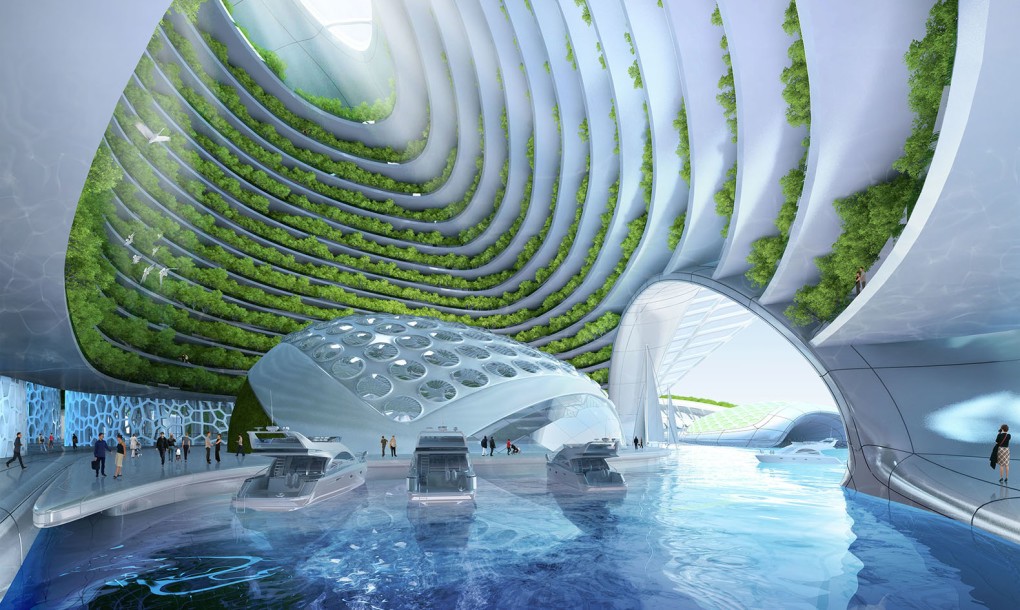
These 3D-printed floating villages could be a means to future energy independence. The structures, envisioned by architect Vincent Callebaut, would recycle ocean waste harvested from international waters as building materials for new, sustainable marine architecture. The composite material would comprise a mix of plastic waste and algae. Biomimetic and completely self-sufficient, these sustainable habitats are a vision of an egalitarian society for environmentally conscious individuals.
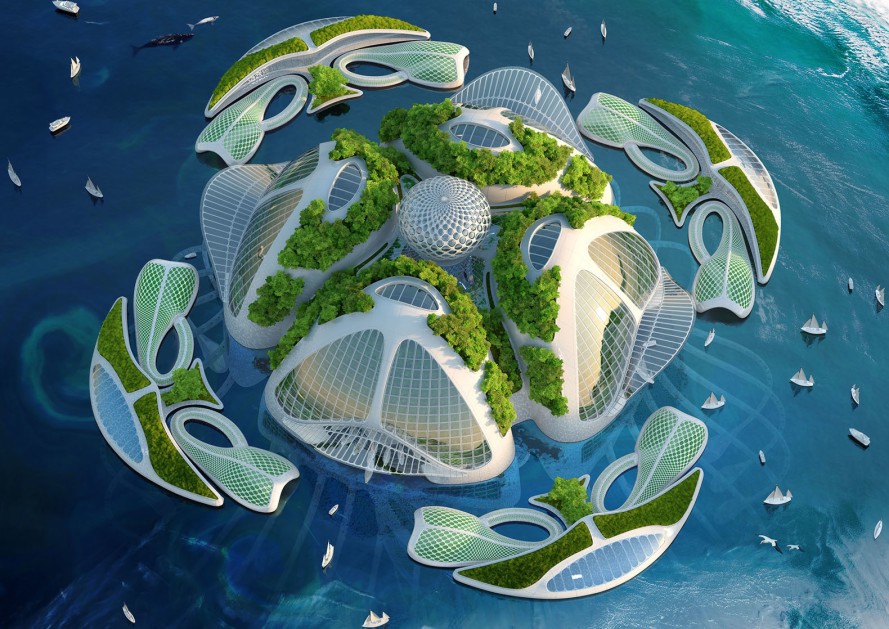
The project aims to resolve long-lasting tensions between Western governments and African countries when it comes to global energy consumption. Thanks to Archibiotics, a discipline pioneered by Callebaut, a new type of architecture would be born-one that combines renewable energies and information and communication technologies (NTIC) in order to offer energy independence to each state in the world and end oil-related conflicts.
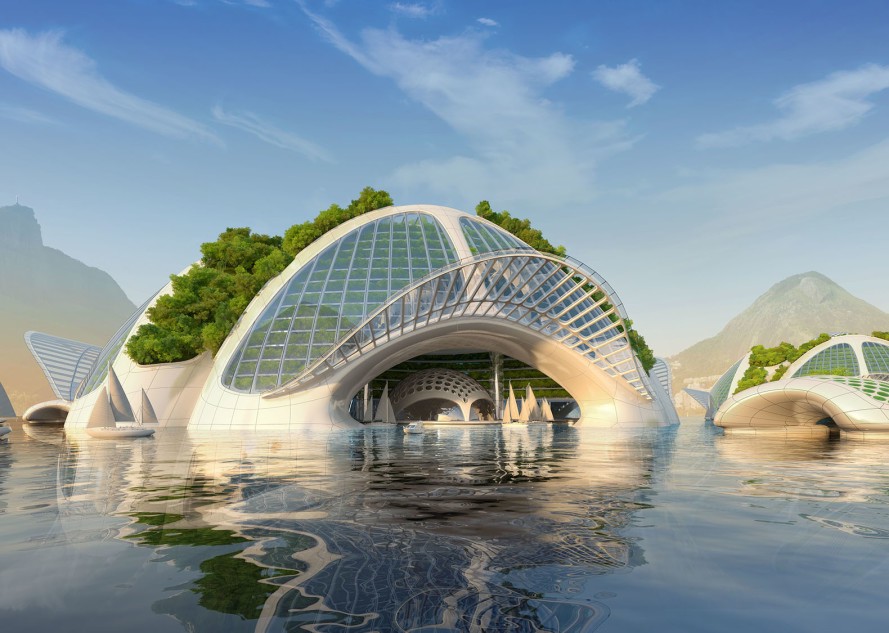
The inhabitants of these utopian structures, called the People of the Seas, would invent new underwater urbanization processes to mitigate ocean acidification and pollution, while living in a self-sufficient way. They would recycle 100 percent of ocean plastic waste to create a sustainable habitat called Aequoreas. Once built, these ecosystems would continue to grow on their own, using calcium carbonate contained in water to form an external skeleton, semi-permeable membranes to desalinate seawater and microalgae to produce energy for heating and climate control.
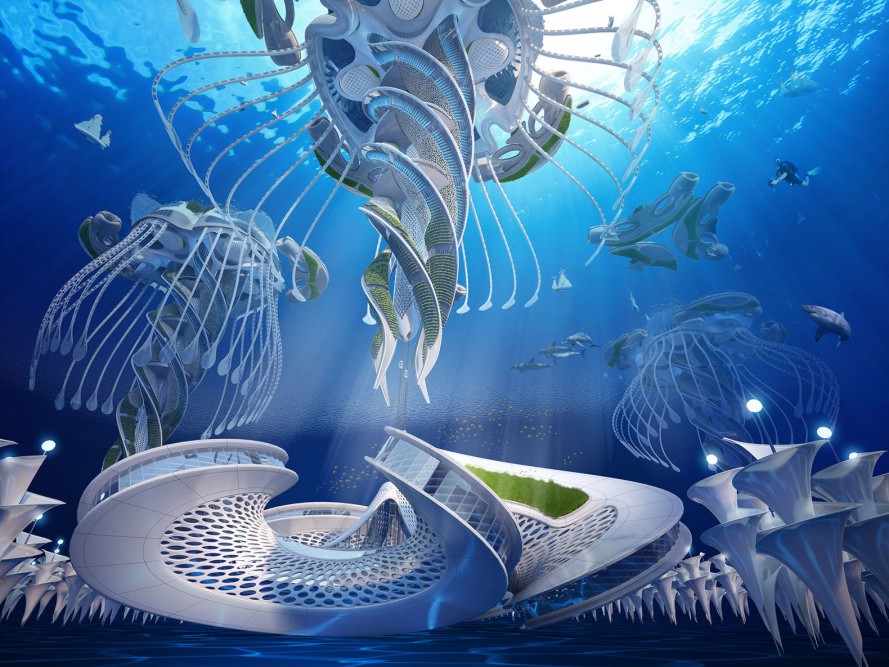
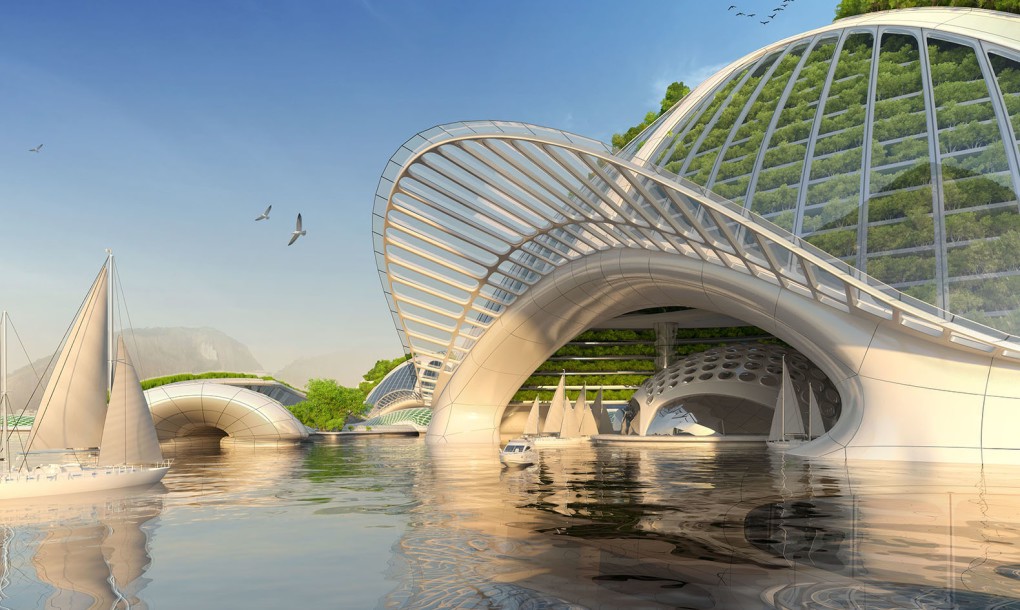
The villages move like submarines and ships and can accommodate up to 20,000 people. The main access is located on the surface of the water and leads through four marinas covered with a mangrove rooted on a floating dome 500 meters in diameter. All residential units are modular and accompanied by co-working spaces, fablabs, recycling plants, science labs, educational hotels, sports fields and aquaponic farms.
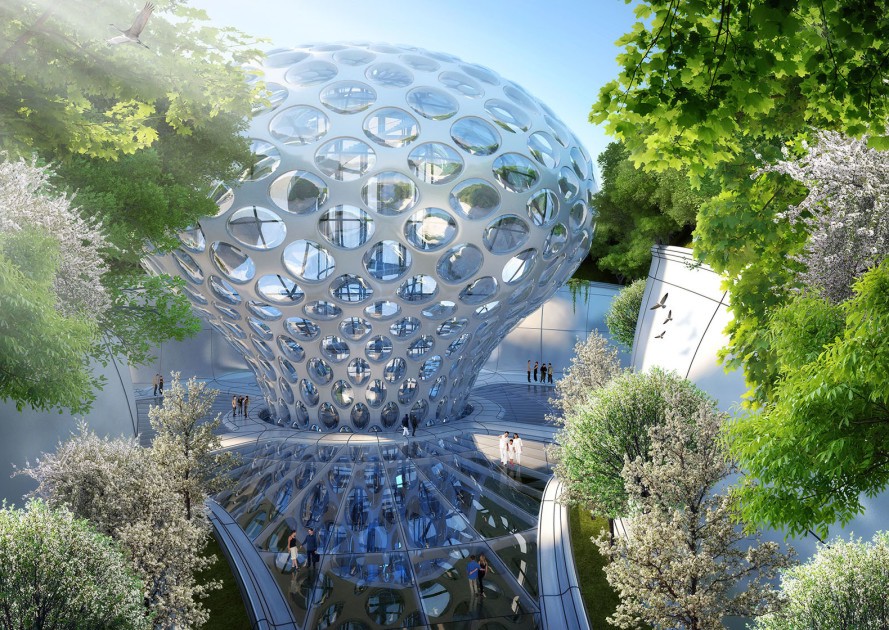
Algae, plankton and mollusks rich in minerals, proteins and vitamins are grown for food and maintained as “nurseries for the aquatic fauna and flora”. Produce from on-board organic farms, orchards and vegetable gardens are distributed in bulk, in reusable, biodegradable containers. Even the furniture is made from bio-based materials glued together with materials synthesized from mussels.
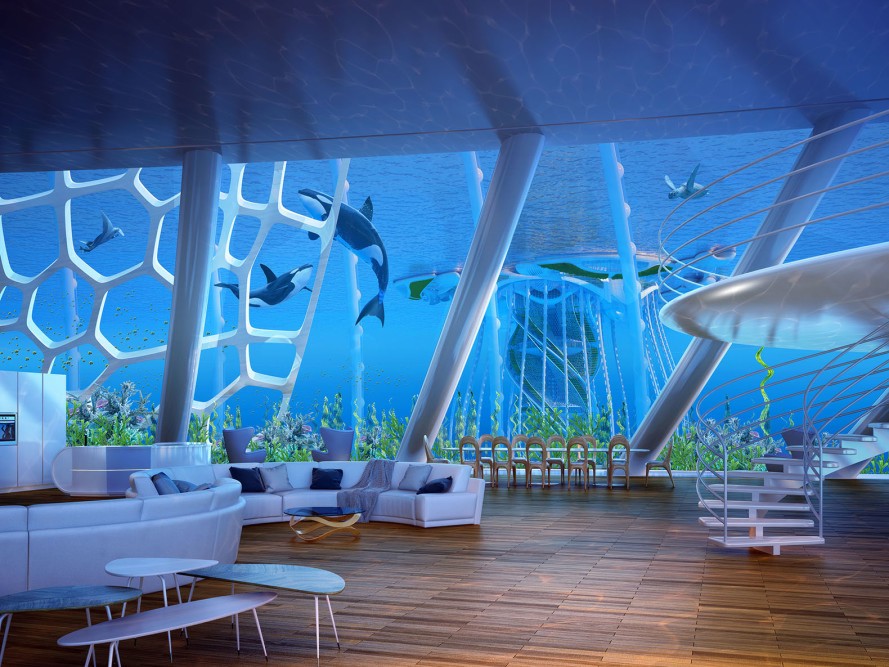
Aequoreas villages are not only an architectural proposal. The architect devised an economic system to complement its energy self-sufficiency. A horizontal egalitarian model envisioned by Callebaut is based on ” eco-conscious individual entrepreneurship” acting as the social and economic backbone of a utopian society.
Original Article from:Inhabitat
By: Lidija Grozdanic