
RECOMMENDED VIDEOS

ReMaterialise the real choice in eco bags
ReMaterialise

CleanGo GreenGo - Greasy Kitchen Stove
CleanGo GreenGo

Luna - Micro Pulse Steam Cleaner
Anvid Products, Inc

Eco Spa - The Original Hard Cover Spa
Sacramento Hot Tub Warehouse

Yumi Return Compostable 100% Natural Starch Cups
eAccess Solutions Inc
Related Stories
German city offers ingenious alternative to single-use coffee cups
These vegan “Star Wars” sneakers are made with discarded pineapple leaves
Loch sunglasses are made of 500-year-old timbers from the Great Lakes
Freitag Bags still going strong after 24 years
Norton Point makes stylish sunglasses from recycled ocean plastic
20 Jan, 2016

MIT’s new warm incandescent light bulb is nearly 3x more efficient than LEDs
Eco Products & Services | UNITED STATES | 20 Jan, 2016
Published by : Ecotechtube
As engineers across the lighting industry have worked to develop more energy efficient light bulbs, many thought incandescent bulbs would go extinct. However, a team of researchers at MIT decided not to leave them in the dust. Instead, they tweaked the design and came up with an incandescent light bulb that is several times more energy efficient than LEDs and fluorescent bulbs. The new bulb is also vastly better at duplicating natural daylight than modern energy efficient bulbs, so it could give the competition a real run for their money.
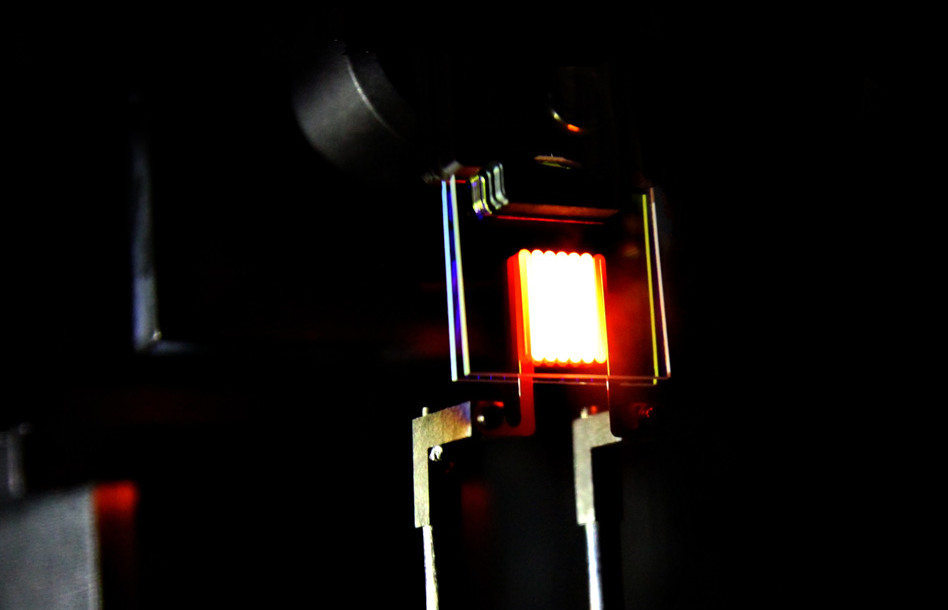
Traditional lightbulbs – that is to say, cheap incandescent varieties – are typically only five percent efficient, losing 95 percent of energy to the atmosphere. The MIT team determined they could wrap the filament with a special crystal structure inside the bulb’s glass to “recycle” energy that is usually lost. The result, according to tests on the proof-of-concept design, is an incandescent bulb that emits the familiar warm glowing light while reaching efficiency levels up to 40 percent. In addition to being a huge improvement over traditional bulbs, MIT’s new bulb also blows LED and fluorescent lighting out of the water, since those typically top out around 14 percent efficiency.
The other huge selling point of the new bulb is the quality of the light it emits. Rather than a clinical white light like LEDs, the updated incandescent shows colors more naturally, mimicking daylight more closely. That accomplishment is measured in a bulb’s “color rendering index,” and traditional incandescent bulbs rate 100, matching daylight hues exactly. The closest an LED or fluorescent bulb can come is 80, but most modern energy-efficient bulbs on the market today rate much lower.
“An important feature is that our demonstrated device achieves near-ideal rendering of colours,” said principal research scientist Ivan Celanovic. “That is precisely the reason why incandescent lights remained dominant for so long: their warm light has remained preferable to drab fluorescent lighting for decades.”
Images & Article taken from Inhabitat