
RECOMMENDED VIDEOS
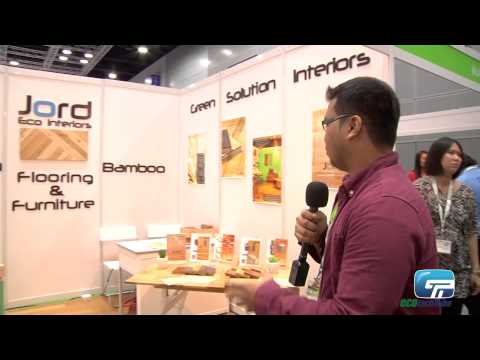
Malaysia Timber Industrial Board (One Tech Sdn Bhd) : Bamboo…
Malaysian Timber Industrial Board
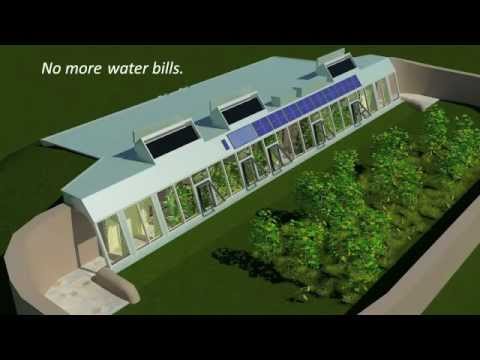
Earthship Global Model: Radically Sustainable Buildings.
Earthship Biotecture
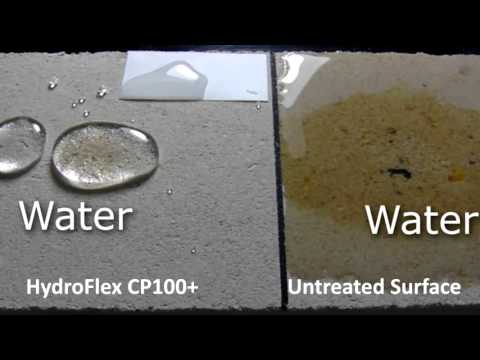
HydroFlex Concrete Protect CP100+
Hydros Solutions Ltd
Goodrich Global - Acoustical Wallcovering ( Eco Art )
Goodrich Global (KL) Sdn Bhd
Candice Olson - Cork Floors - Green & Sustainable
Wicanders
Related Stories
‘House of Trash’ proves how waste can transform into beautiful home design
Whimsical park built of recycled materials pops up in Shanghai
Elevated bamboo peace bridge for the Korean Demilitarized Zone unveiled by Shigeru Ban and Jae-Eun Choi
Colossal cardboard temple pops up in Chiang Mai in just one day
“Cannabis walls” add warmth to this eco-friendly home in Israel
07 May, 2016

Dramatic Greenhouses Accentuate Ecorium Eco-Park in Korea
Green Building Materials, Construction & Design | KOREA, REPUBLIC OF | 09 May, 2016
Published by : Eco Media Asia
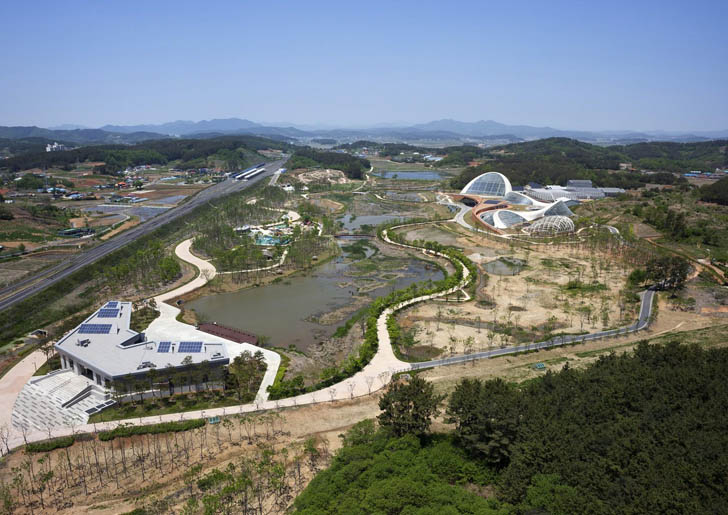
Ecorium located in Seocheon-gun, Korea; it was revealed as the competition winner for a park that would create a hub for ecologically focused study and outreach. Designed by Samoo Architects and Engineers with Grimshaw Architects, this project is part of the government funded Ecoplex, which houses the National Ecological Institute. The primary goal of the Ecoplex is to preserve the natural environment through public education while facilitating the advancement of restoration ecology as well as housing ecological artifacts for research or display.
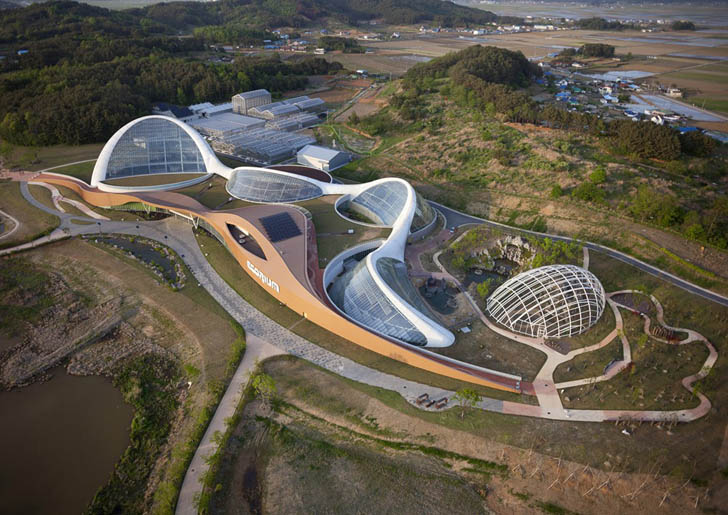
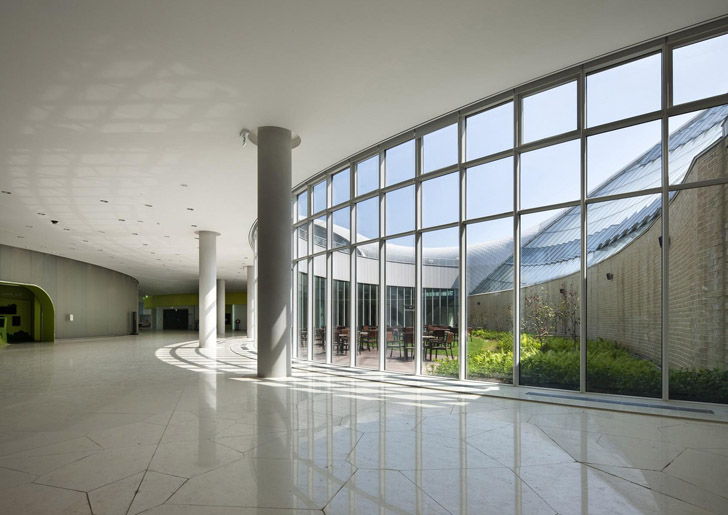
The wedge-shaped glass enclosures are greenhouses that will each be a controlled environment home to different climate zones from tropical to polar. There are five total climates represented including Korea’s own temperate zone, which utilizes access to outdoors. The greenhouses flow along an organic, meandering path so as not to shade one another. As visitors walk along the green connector, they can, within minutes, peer into different corners of the globe.
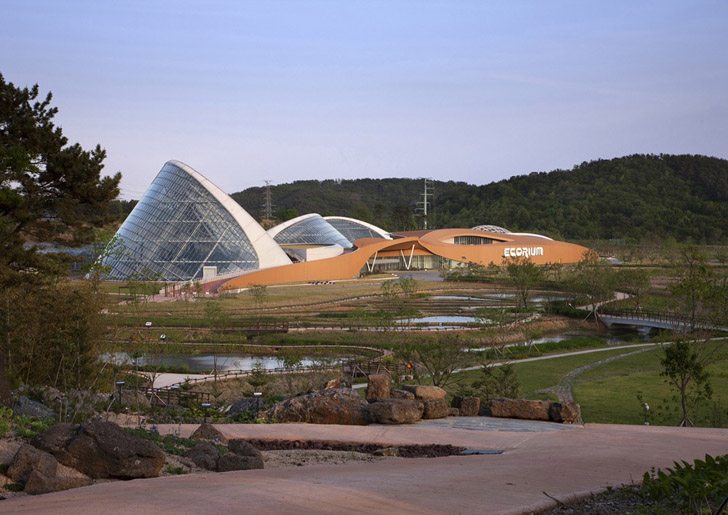
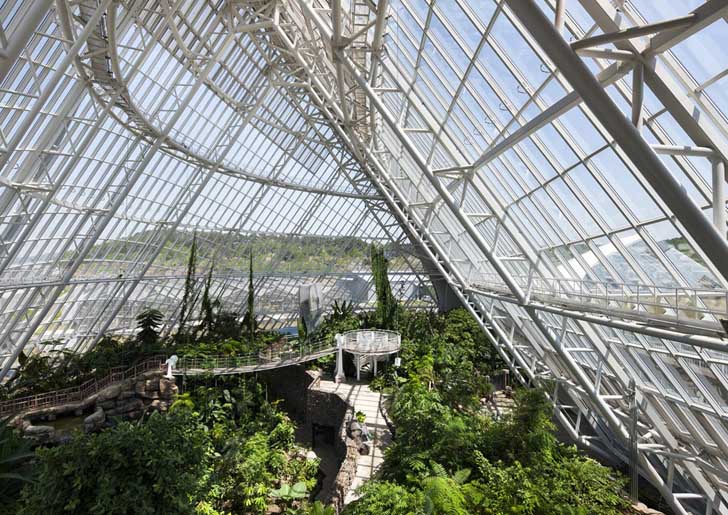
A building dedicated to safeguarding the environment, it has various featuresthat reduce its footprint. Natural ventilation is used where possible based on program type or climate zone and the sloped curtain walls gather rainwater for irrigation. Most impressively, this project is, according to a restoration ecologist from the University of Wisconsin – Madison, “the newest and most ambitious innovative, and exciting ecological restoration center ever attempted…”
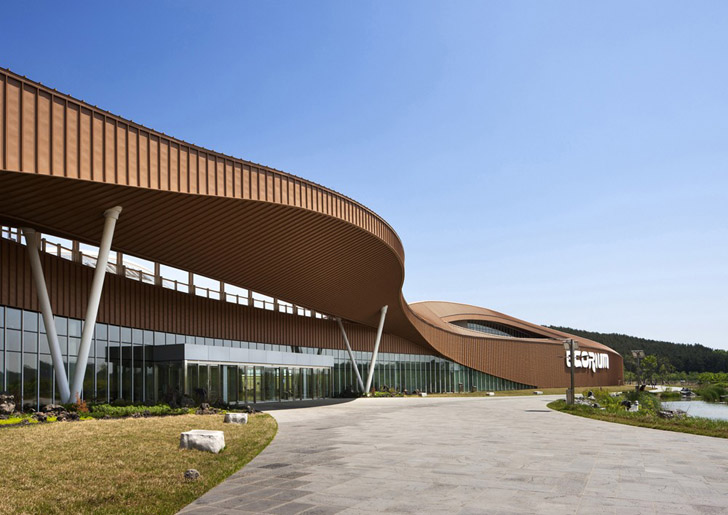
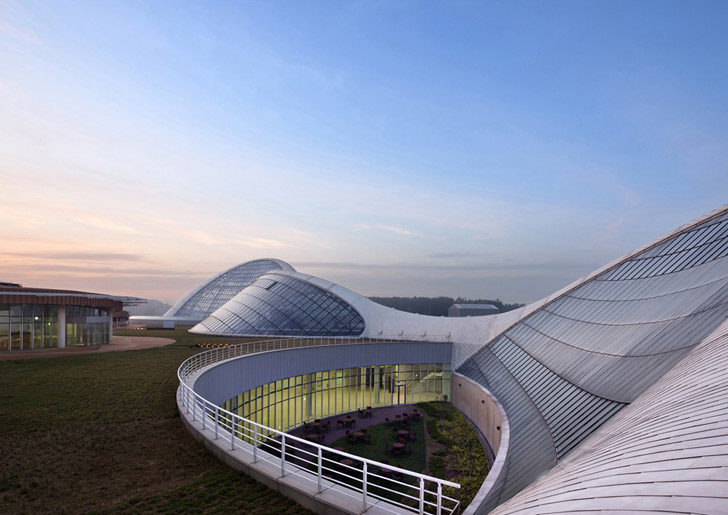
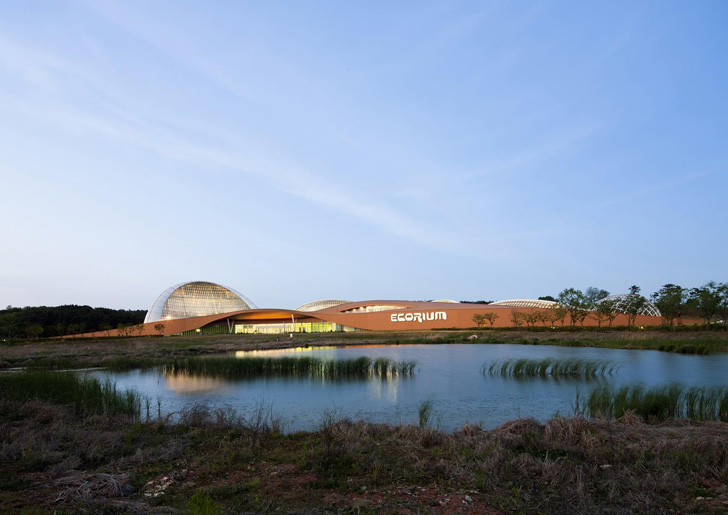
Source via World Architect News
Source via UW Madison Botany & Samoo Architects & Engineers
Photo by Young Chae Park